DonarAyuda
Todas las historias

Breast Cancer Financial Assistance for Restaurant Workers

9 de julio de 2026

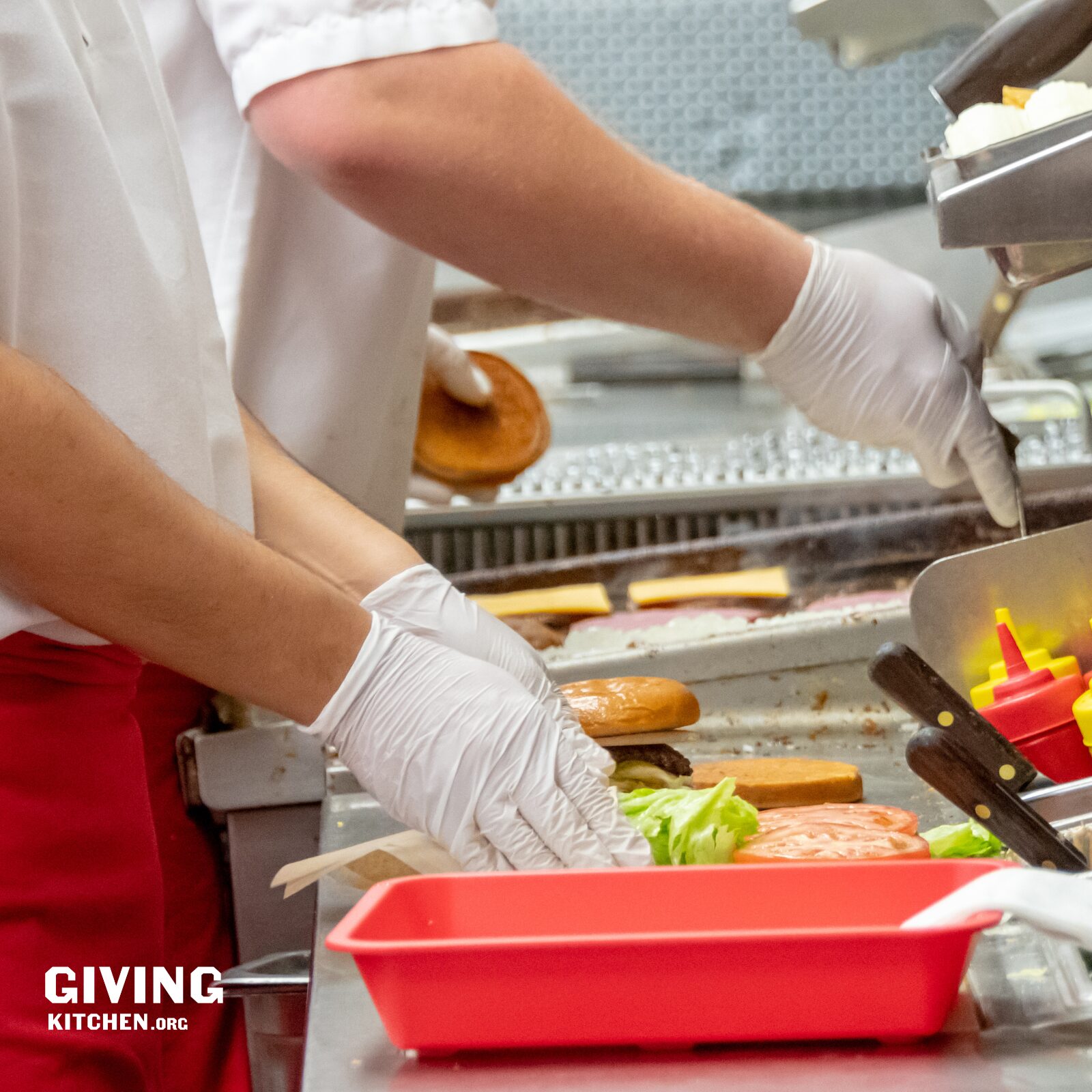
Fast food workers like Sofia can receive emergency rent assistance from Giving Kitchen

When a Food Service Worker Needed Breast Cancer Support Beyond Medical Care

A breast cancer diagnosis affects far more than a person’s health. It can quickly create financial hardship through missed work, lost income, mounting medical expenses, and the risk of housing instability.

For restaurant workers, who often have limited paid leave or emergency savings, even a short medical leave can become a financial crisis.

Sofia, a quick-service restaurant manager in California and mother of three, experienced exactly that.

When she developed a serious breast infection requiring emergency surgery, she suddenly found herself unable to work. While her medical team focused on her recovery, Giving Kitchen stepped in to provide emergency financial assistance that helped keep her family housed.

A Medical Emergency That Changed Everything

In early August, Sofia discovered a painful lump in her left breast. After visiting her OB-GYN and undergoing an ultrasound, her condition rapidly worsened despite antibiotic treatment.

She was admitted to the emergency department, where doctors determined she required emergency surgery.

Her recovery involved daily wound care and weeks away from work.

«My recovery has been the most excruciating pain of my whole life,» Sofia shared. «It has taken a toll on my mental and physical health. As much as I yearn to return to work, I just physically cannot.»

Without her income, Sofia worried about paying rent, utilities, and supporting her three children.

Like millions of food service workers across the United States, she was only one medical emergency away from financial instability.

The Financial Impact of Breast Cancer Treatment

Many people searching for breast cancer assistance are not only looking for medical information—they’re searching for help paying everyday bills during treatment.

Lost wages, transportation costs, childcare, rent, utilities, groceries, and other basic expenses often become overwhelming while someone is recovering.

For restaurant workers, these challenges can be even greater because many hourly employees have limited paid leave and few financial safety nets.

Sofia’s story reflects a reality experienced by thousands of food service workers every year: a medical crisis can quickly become a housing crisis.

How Giving Kitchen Provides Financial Assistance During Medical Crises

Giving Kitchen provides emergency financial assistance specifically for eligible food service workers experiencing crises caused by illness, injury, housing disasters, or the death of an immediate family member.

After reviewing Sofia’s application, Giving Kitchen approved one month of rental assistance, allowing her family to remain safely housed while she focused on healing.

Her case manager also connected her with Giving Kitchen’s Stability Network, a crisis management program that helps clients access housing resources, healthcare, mental health support, employment services, family assistance, and other community resources.

Through a partnership with FindHelp, the Stability Network connects food service workers with more than 200,000 resources nationwide, helping families recover long after the immediate emergency has passed.

Why Emergency Financial Assistance Matters During Breast Cancer Recovery

Housing stability plays a critical role in health outcomes.

Research consistently shows that eviction and housing insecurity are associated with poorer physical health, increased stress, depression, anxiety, and worse long-term outcomes for families.

Children living through housing instability are also more likely to experience food insecurity, disruptions in school attendance, and lower educational achievement.

By helping Sofia remain in her home during recovery, Giving Kitchen protected far more than her finances. The assistance helped preserve stability for her entire family during one of the most difficult periods of their lives.

Giving Kitchen’s own impact data reflects this importance:

  • 75% of surveyed recipients report that Giving Kitchen assistance prevented eviction.
  • 73% say the assistance prevented homelessness.

More Than Financial Help

Since its founding, Giving Kitchen has served more than 40,000 food service workers experiencing unexpected hardship and provided more than $17 million in direct financial assistance.

Every person helped has a unique story, but many share the same concern: how to continue supporting their family while facing a serious medical condition.

For Sofia, emergency rental assistance gave her one less thing to worry about while recovering from surgery.

Are You a Restaurant Worker Facing a Medical Crisis?

If you work in food service—including restaurants, bars, food trucks, catering, cafeterias, coffee shops, or other hospitality roles—and you’re experiencing financial hardship because of illness, injury, a housing disaster, or the death of an immediate family member, you may qualify for free emergency financial assistance from Giving Kitchen.

Giving Kitchen’s services are available at no cost, and assistance is offered in more than 180 languages.

If you or someone you know is a food service worker navigating the financial challenges of a serious medical condition, including breast cancer treatment or recovery, Giving Kitchen may be able to help.

Sources

Board of Governors of the Federal Reserve System. (2019). Report on the Economic Well-Being of U.S. Households in 2018.

Vásquez-Vera, H., Palència, L., Magna, I., Mena, C., Neira, J., & Borrell, C. (2017). The threat of home eviction and its effects on health through the equity lens: A systematic review. Social Science & Medicine, 175, 199-208. doi:10.1016/j.socscimed.2017.01.010

Fowler, K. A., Gladden, R. M., Vagi, K. J., Barnes, J., & Frazier, L. (2015). Increase in suicides associated with home eviction and foreclosure during the US housing crisis: Findings from 16 national violent death reporting system states, 2005-2010. American Journal of Public Health, 105(2), 311-316.

Collinson, R. & Reed, D. (2018). The effects of evictions on low-income households.

Bolívar Muñoz, J., Bernal Solano, M., Mateo Rodríguez, I., Daponte Codina, A., Escudero Espinosa, C., Sánchez Cantalejo, C., González Usera, I., Robles Ortega, H., Mata Martín, J. L., Fernández Santaella, M. C., & Vila Castellar J. V. (2016). The health of adults undergoing an eviction process. Gaceta Sanitaria, 30(1), 4-10.

Leifheit, K. M., Schwartz, G. L., Pollack, C. E., Black, M. M., Edin, K. J., Althoff, K. N., & Jennings, J. M. (2020). Eviction in early childhood and neighborhood poverty, food security, and obesity in later childhood and adolescence: Evidence from a longitudinal birth cohort. SSM – Population Health, 11, doi: 10.1016/j.ssmph.2020.100575.

Collinson, R., Dutz, D., Humphries, J. E., Mader, N. S., Tannenbaum, D., & van Dijk, W. (2025). The effects of eviction on children. NBER Working Paper No. 33659.


VOLVER AL INICIO